


Overview
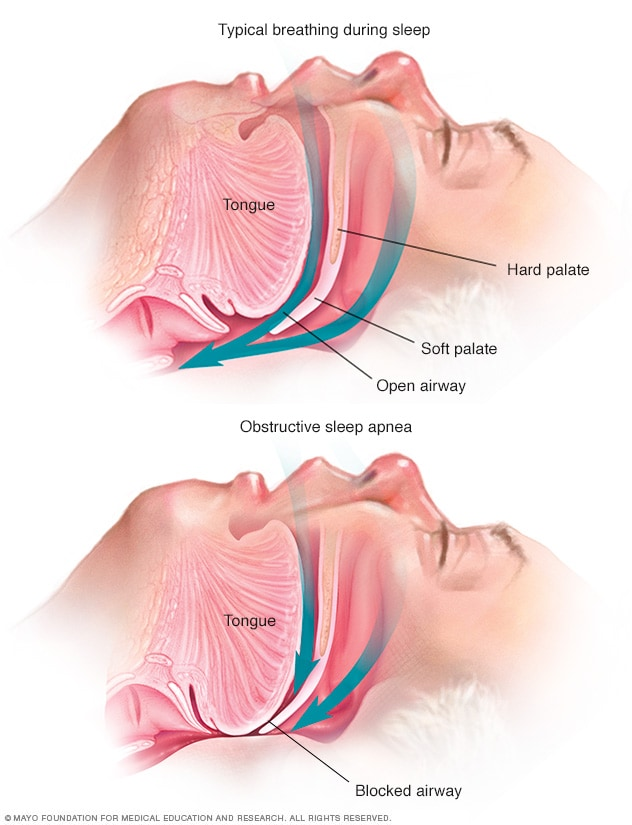
Obstructive sleep apnea is the most common sleep-related breathing disorder. People with obstructive sleep apnea repeatedly stop and start breathing while they sleep. These breath pauses are known as apneas.
There are several types of sleep apnea. Obstructive sleep apnea occurs when the throat muscles relax and block the airway. This happens off and on many times during sleep. A common sign of obstructive sleep apnea is snoring.
Treatments for obstructive sleep apnea are available. One treatment is a device that uses air pressure to keep the airway open during sleep. Another option is a mouthpiece to thrust the lower jaw forward during sleep. In some people, surgery might be an option. In people with obesity, weight loss may improve symptoms of obstructive sleep apnea.
Symptoms
Symptoms of obstructive sleep apnea during the night include:
· Loud snoring.
· Pauses in breathing during sleep, often noticed by a partner.
· Waking during the night gasping or choking.
· Needing to urinate often.
Symptoms of obstructive sleep apnea during the day include:
· Excessive daytime sleepiness.
· Waking in the morning with a dry mouth or sore throat.
· Morning headaches.
· Trouble focusing.
· Mood changes, such as feeling depressed or being easily upset.
· High blood pressure, especially if you're taking multiple medicines to manage it.
· Decreased interest in sex.
When to see a doctor
Consult a healthcare professional if you have, or if your partner notices, the following:
· Snoring loud enough to disturb your sleep or the sleep of others.
· Waking up gasping or choking.
· Pausing in your breathing during sleep.
· Excessive daytime drowsiness. You may fall asleep while working, watching television or even driving a vehicle.
Snoring doesn't always indicate something potentially serious, and not everyone who snores has obstructive sleep apnea.
Be sure to talk to your healthcare professional if you snore loudly, especially if your snoring is interrupted by periods of silence.
Ask your healthcare professional about any sleep issues that leave you fatigued, sleepy and irritable on a regular basis. Excessive daytime drowsiness may be due to other conditions, such as narcolepsy. These conditions are treated separately.


