


Overview
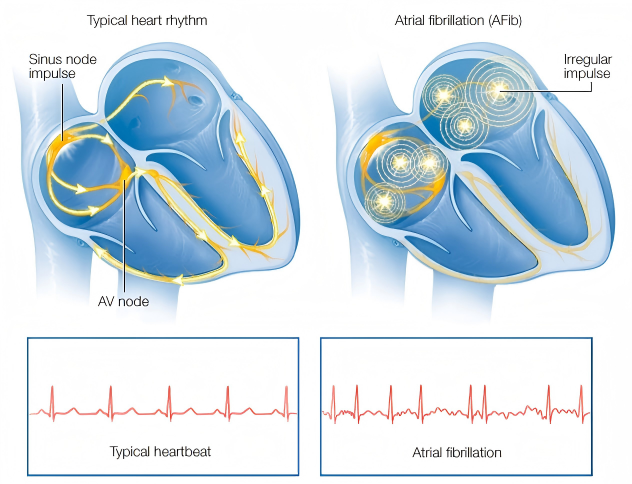
Atrial fibrillation (AFib) is an irregular and often very rapid heart rhythm. An irregular heart rhythm is called an arrhythmia. AFib can lead to blood clots in the heart. The condition also increases the risk of stroke, heart failure and other heart-related complications.
During atrial fibrillation, the heart's upper chambers, called the atria, beat chaotically and irregularly. They beat out of sync with the lower heart chambers, called the ventricles. AFib may cause a fast, pounding heartbeat, shortness of breath or light-headedness. Some people don't notice symptoms.
Episodes of atrial fibrillation may come and go, or they may be constant. AFib itself usually isn't life-threatening. But it's a serious condition that needs proper treatment to prevent stroke.
Treatment for AFib may include medicines, therapy to shock the heart back to a regular rhythm and procedures to block faulty heart signals.
A person with atrial fibrillation also may have a related heart rhythm disorder called atrial flutter. The treatments for AFib and atrial flutter are similar.
Symptoms
Symptoms of atrial fibrillation (AFib) may include:
· A fast, fluttering or pounding heartbeat, called palpitations.
· Chest pain.
· Dizziness.
· Fatigue.
· Lightheadedness.
· Reduced ability to exercise.
· Shortness of breath.
· Weakness.
Some people with AFib don't notice any symptoms.
Atrial fibrillation may be:
· Occasional, also called paroxysmal atrial fibrillation. AFib symptoms come and go. The symptoms usually last for a few minutes to hours. Some people have symptoms for as long as a week. The irregular heartbeat can happen again and again. Symptoms might go away on their own. Some people with this type of AFib need treatment.
· Persistent. The irregular heartbeat is constant. The heart rhythm does not correct itself. If symptoms occur, medical treatment is needed to reset the heart rhythm.
· Long-standing persistent. This type of AFib is constant and lasts longer than 12 months. Medicines or a procedure are needed to correct the irregular heartbeat.
· Permanent. The irregular heart rhythm can't be reset. Medicines are needed to control the heart rate and to prevent blood clots.
When to see a doctor
If you have symptoms of atrial fibrillation, make an appointment for a health checkup. You may be referred to a doctor trained in heart diseases, called a cardiologist.
If you have chest pain, get emergency medical help right away. Chest pain could mean that you're having a heart attack.

